2026-10-25 · Carlos Rivera
How Rainy Season Affects Dumpster Rental in Stockton
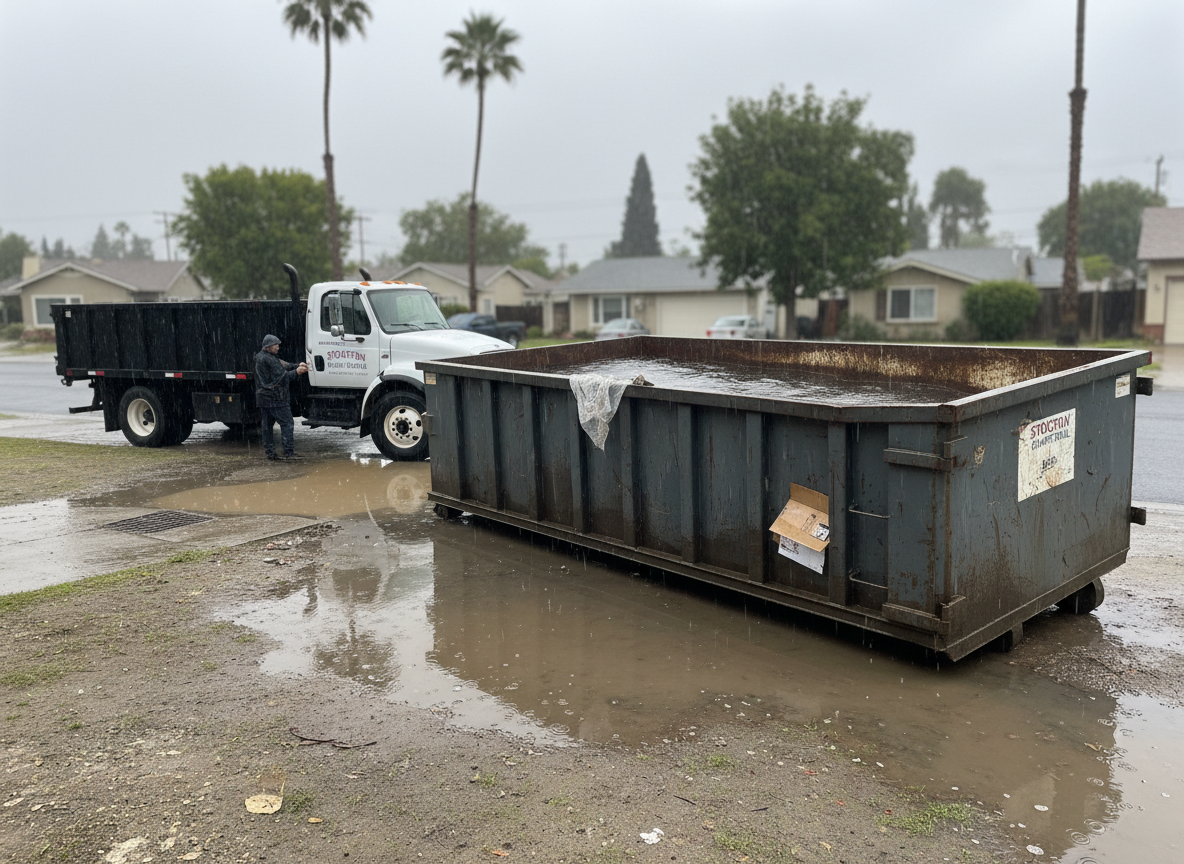
Stockton's rainy season from November through March typically adds 2-5 days to standard dumpster rental durations because saturated clay soils in West Stockton and Lincoln Village lose bearing strength and force crews to reschedule pickups until the ground firms.
Soil Saturation and Load Limits in San Joaquin County
Winter rains in Stockton's hot-summer Mediterranean climate turn the fine-textured soils common around the Stockton Channel and University of the Pacific into soft, unstable surfaces. A 20-yard roll-off that sits safely on dry ground in summer can sink several inches after 1.5 inches of rain, shifting weight onto the truck axles and requiring lighter loads or plywood stabilization pads. Crews working near the Stockton Arena often carry extra gravel to create temporary pads because the flat terrain offers little natural drainage. Homeowners in older West Stockton blocks see the biggest change: driveways built before 1960 lack proper base rock, so even light residential loads can rut the surface. This forces operators to visit the site the day before delivery to test firmness rather than relying on the address alone.
Access Issues in Downtown Stockton and Lincoln Village
Narrow alleys behind Downtown Stockton storefronts and the tight cul-de-sacs in Lincoln Village become slick and narrow during storms, limiting truck turning radius. When rain falls steadily for 48 hours, crews often park on the street and hand-carry debris rather than risk backing a loaded truck onto wet pavement. The same pattern appears along the levee roads near the Stockton Channel, where standing water pools against curbs and blocks standard 10-foot-wide access. Renters planning backyard cleanouts near University of the Pacific frequently request same-day delivery before a forecast storm so the unit can be placed on higher, drier ground. These route adjustments add 30-45 minutes per stop and explain why rental companies schedule extra buffer days in the wet months.
Drainage and Placement Adjustments Near Local Landmarks
Properties along the Stockton Channel and around the Stockton Arena sit on reclaimed marshland that drains slowly. When the water table rises, even a properly permitted unit can tilt as one corner settles. Experienced crews place 4x8 sheets of plywood or 2-inch gravel pads under each wheel to distribute weight and keep the floor level for safe loading. In Manteca and Lodi, where many Stockton jobs draw overflow work, similar river-adjacent lots require the same treatment. Renters who ignore this step often see water pooling inside the container, soaking cardboard and drywall and increasing the final weight by several hundred pounds. Checking the forecast 24 hours ahead and requesting a pre-delivery site visit prevents most of these issues.
Practical Steps for Stockton Renters During Rainy Months
Measure your driveway slope before ordering so the company can bring extra blocking if needed. Keep a tarp on site to cover the open top when rain is expected, because water adds weight that can push a load over legal limits on the return trip to the landfill. Schedule the rental to end on a dry day rather than the exact project finish date; most operators allow one free extension day if weather delays pickup. For residential jobs in older neighborhoods, confirm the truck can reach the placement spot without crossing soft lawn strips. These small checks keep the rental on schedule even when the season brings repeated storms.
Related Planning Resources
Homeowners comparing container sizes for wet-weather projects often review the guide on what size dumpster fits a Stockton backyard cleanup. Those working near city streets also check permit rules early because rain can push a project timeline into a period when street-use permits require extra notice. Both resources sit on the same site and answer the questions that come up most often once the first winter storm arrives.